Jonathan Little Poker Coaching Review

Premium members get INSTANT ACCESS to 74 poker courses worth $6,946, including: CASH GAMES: Jonathan Little's Cash Game Masterclass. Beating Loose Live Cash Games. How to Beat Online 6-MAX Cash Games. TOURNAMENTS: WSOP Preparation Sessions. 25K Platinum Coaching Sessions. Bigger $109 1st Place Review.
- Jonathan Little Poker Training
- Jonathan Little Poker Coaching Review
- Jonathan Little Poker Youtube
- Jonathan Little Poker Coaching
- Jonathan Little Poker Pdf
Card Player Magazine, available in print and online, covers poker strategy, poker news, online and casino poker, and poker legislation. Sign up today for a digital subscription to access more than 800 magazine issues and get 26 new issues per year!
Poker is a difficult game. If you are not consistently improving your skills, the game is certain to pass you by, ensuring you eventually become a losing player. Don’t let that happen!
- In this 3+ HOUR course, I review EVERY HAND from a $1/$3 cash game at Live at the Bike. This table was full of very good, loose aggressive players including myself, Jason Koon, Scott Clements, Jeff Gross and Kyle Julius! The Ultimate Cash Game Bundle also includes Combating Limpers with Jonathan Little.
- Day 16 & 17: A Jonathan Little Tournament Review with Michael Acevado. The two-part series featuring Michael Acevado reviewing Little’s play in a high stakes tournament is probably one of the most complex lessons in this entire Jonathan Little Tournament Challenge.
- Jonathan Little is a professional poker player and best-selling poker author with more than $7 million in live tournament earnings. Poker Strategy, Poker Coaching, Poker. Offering online.
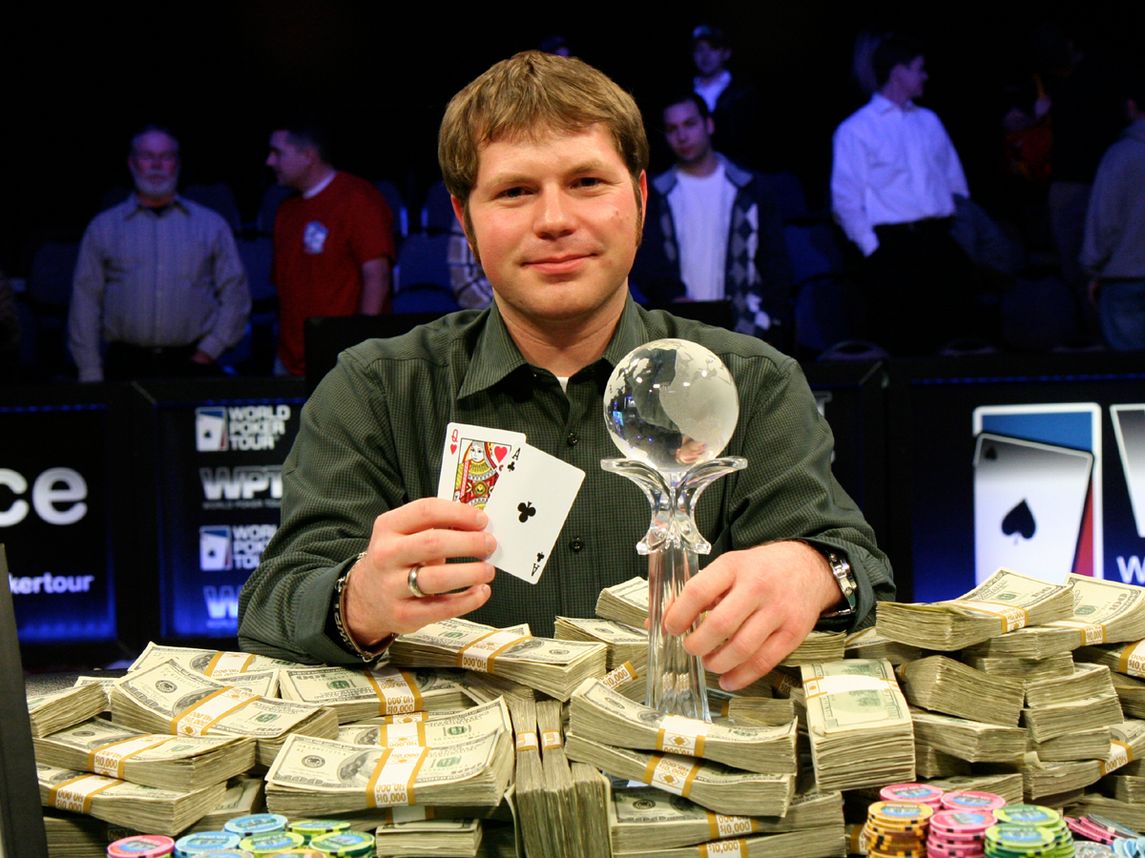
- Jonathan is a 2-time World Poker Tour Champion and the WPT Season VI Player of the Year. He has over $7 million in live and online tournament cashes and recently won a $2,200 NL Event for $97,160. Jonathan is the creator of PokerCoaching.com.
Here are five ideas that, if applied intelligently, will ensure you stay competitive. While you may already implement these ideas on a regular basis, it is always beneficial to have them at the front of your mind.
1. Treat yourself like a mental athlete.
It is well known that most world-class athletes eat an almost perfect diet and spend at least some time in the gym. Since poker is a mental game, you should treat your mind as if it is the body of a world-class athlete, assuming you actually aspire to be great at poker. If you are drinking a lot of alcohol, eating unhealthy foods, or abusing drugs, you are filling your mind with filth that will eventually diminish your mental capacities. The sooner you get destructive substances out of your system, the better. Especially if you want to succeed long term, treat your mind and body well.
Jonathan Little Poker Training
2. Study the players who beat your games.
While it is fun and exciting to watch world-class players compete at the highest levels, it is usually not the best way to learn. It is important to understand that the hands they play rarely give an accurate picture of the world-class player’s overall game plan. When you see one of these players attempt an insane bluff, understand that they have a specific image and are attempting the bluff for a specific reason. They are not running the bluff just because they feel like bluffing or because they bluff almost all of the time. While they may frequently bluff with a specific hand combination, they may also think that their opponent folds way too often, allowing them to bluff far more often than the GTO (game theory optimal) strategy indicates. Essentially, it is difficult to know why someone is adjusting without the full picture, which you never have as an outside viewer.
Instead of studying the highest stakes players in the highest stakes games, study the best players in the games you play. Every time you sit at the poker table, especially if you are a small- or mid-stakes player, you will be at the table with players who are better than you. Pay attention to the plays they make that allow them to win. Make a point to incorporate those plays into your strategy. You may find that as you move up, some of the plays that worked in the small-stakes games no longer work in the higher stakes games. So, pay attention to the winners in your new game and repeat the process. If you find your mind wandering while at the poker table, you are not using your time wisely. You only have so much time on this earth. Don’t squander it!
3. Think about your opponents’ ranges.
If you routinely put your opponent on one specific hand, you are certainly playing poorly. As a basic example, if a tight player raises from first position, you should not put him squarely on A-A, A-J, or any other specific hand. Instead, you should put him on a range of hands, perhaps A-A, K-K, Q-Q, J-J, 10-10, 9-9, A-K and A-Q. You can then narrow that range as the hand progresses based on his actions on the flop, turn and river.
If you put your opponent on one hand from the start, you will make significant blunders due to not assessing each situation properly. I thoroughly discuss how to assess ranges on my training site. Get your free trial membership now at PokerCoaching.com.
4. Stop continuation betting with 100 percent of your range.
In my first book, Secrets of Professional Tournament Poker, Volume 1, I suggested that you should continuation bet close to 100 percent of the time. While this advice was spot-on a few years ago when most players folded too often, in today’s games, you should lower your continuation bet percentage a bit. You should tend to check when the board does not favor your range, as well as when you have absolute trash, when you have a marginal made hand that cannot withstand significant aggression, and when you fail to connect with the board in a multiway pot. That said, I still continuation bet more often than most players because even today, most players fold a bit too often, especially to small 25 percent pot bets.
5. Double and triple barrel more often.
Jonathan Little Poker Coaching Review
Most players now know to continue against flop continuation bets with a somewhat wide range including made hands, draws, and the occasional hand that has only a little potential to improve but will have lots of bluffing opportunities. They also know to continue against turn bets with any sort of made hand or reasonable draw. However, when you make a sizable river bet, most opponents will give you credit for a strong value hand.
So, do not be afraid to get out of line and make a sizable bet, especially when you have little to no chance of winning at the showdown. Of course, if your specific opponent calls you down with a weak bluff catcher, reverse this advice and start value betting relentlessly on all three streets, extracting maximum value with marginal made hands like top pair with a bad kicker. Do not be afraid to get out of line in order to take advantage of the mistakes your opponents make.
While there are many other things you should do to ensure you are on the road to poker success, I hope you have found these five tips to be helpful. Thanks for reading and good luck in your games! ♠
Jonathan Little is a professional poker player and best-selling poker author with over $7,000,000 in live tournament earnings. If you want to learn how to play fundamentally sound poker and increase your win rate, check out PokerCoaching.com. Click here to try PokerCoaching.com for free.
Jonathan Little Poker Youtube
Card Player Magazine, available in print and online, covers poker strategy, poker news, online and casino poker, and poker legislation. Sign up today for a digital subscription to access more than 800 magazine issues and get 26 new issues per year!
Someone recently asked me how many tournaments I have to lose in a row before I start to get annoyed. They also asked when I start looking for holes in my strategy. While the answers to these questions are probably obvious to most professional players, many amateurs come up with severely incorrect answers.
First off, you should try your best to remove your emotional attachment to your poker results, both good and bad. If you have watched me win a World Poker Tour event on television, you probably noticed that I did not jump up and down and yell about how I am the best poker player in the world immediately afterwards, which is what you might see from players who run hot enough to win a major event.
The reason why I do not celebrate is because I realize that when I buy into any event, I am going to place in each position some percentage of the time. If I happen to bust on the first hand, bubble, final table, or even win, I don’t care too much because I understand I am going to have a fairly random distribution of results over time, hopefully trending in a positive direction because I have an edge in the games.
Sometimes you are going to go 40 tournaments in a row without cashing, which has happened to me twice in my career. While the experience is certainly not fun, you must accept it will happen if you play enough tournaments.
Going on a substantial downswing does not necessarily mean you are playing poorly, although it could be an indicator. Assuming you have a large enough sample to know you are a winning player, a routine downswing should not cause concern. The reason most players get depressed over long downswings is that they are either playing way too large for their bankroll, or they have not played enough games (or done the math) to realize how much variance there is in poker.
As a quick example, I once won three tournaments in a row and then lost 30 tournaments in a row after that. Does this mean I suddenly forgot how to play after winning three tournaments in a row? I don’t think so.
Whether you are winning or losing, you should constantly look for leaks in your game. An extended losing streak should not alter your study time too much, assuming you spend a decent amount of time studying poker on a daily basis even when winning.
When I used to play sit-n-gos online, I would play roughly eight hours per day and study four hours per day. I am confident this is why I was one of the biggest winners at that game. When I play poker today, I write down almost every hand I play and review them both at the end of every day and occasionally when I have free time at home. I suggest you do the same. If you are not looking for leaks and constantly improving your skills, you are certain to fall behind.

Everyone who takes poker seriously should get a poker coach. I have paid well over $25,000 for private coaching throughout my career and I firmly believe that was the best $25,000 I have ever spent. If I could go back in time, I would have actually spent substantially more.
When I used to play a lot of sit-n-gos, I noticed my return on investment was slowly dwindling. I hired a coach, paid him $5,000 for 10 hours of his time, and watched my return on investment immediately rise by two percent. While this may not sound like a lot, I was playing around 2,000 $200 games per month, meaning this coaching made me an additional $8,000 per month. Obviously, that is money well spent.
Jonathan Little Poker Coaching
At some point, you will find you no longer need a private coach. Instead, find a group of peers who play similar games as you. I have a close group of friends I regularly talk to about hands and other poker-related concepts. We bounce ideas off each other and constantly try to find holes in each other’s strategies. If you try to master this game alone, you will find it impossible.
I understand that paying hundreds of dollars per hour for private coaching is not realistic for most poker players, so I made my training site, PokerCoaching.com, which features over 1,000 interactive hand quizzes, monthly in-depth homework assignments, gigantic courses, live webinars, and private streams.
In addition to having lots of content for novice players, I have also hired many of the best players in the world (including James Romero, Faraz Jaka, Matt Affleck, Jonathan Jaffee, Girafganger7, and many more) to make high-level, cutting-edge content that I personally learn a lot from. If you are looking to take your game to the next level, check out PokerCoaching.com. Good luck in your games! ♠
Jonathan Little Poker Pdf
Jonathan Little is a professional poker player and best-selling poker author with more than $7 million in live tournament earnings. If you want to learn how to play fundamentally sound poker and increase your win rate, check out PokerCoaching.com. Click here to try PokerCoaching.com for free.